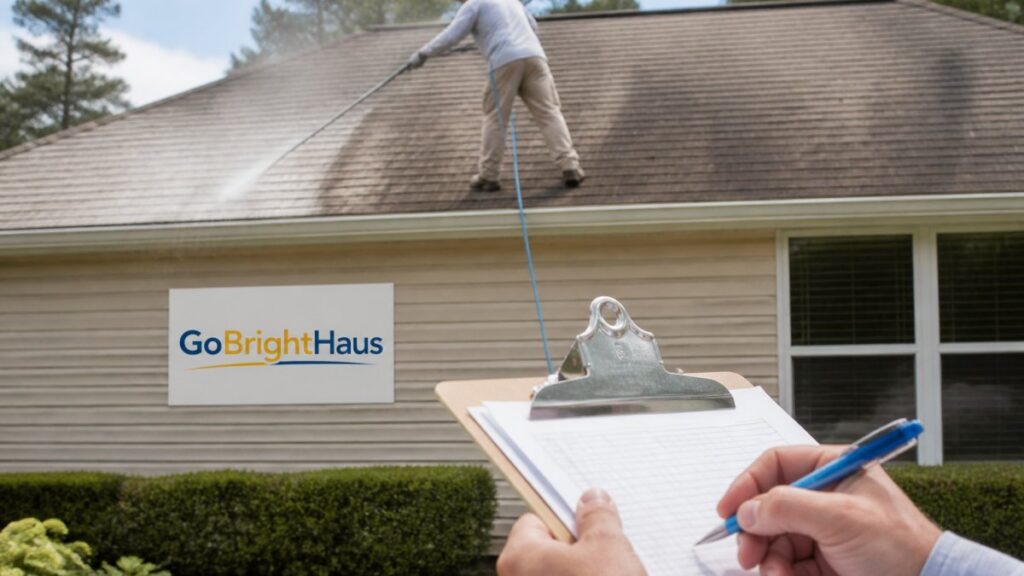
Last Updated: October 23, 2026
Quick Summary
Roof soft washing lasts anywhere from one to three years on average, depending on your local climate and roof conditions. In Charlotte, most homeowners find their results hold strong for 12 to 18 months before noticeable regrowth appears.
- Soft washing results last 12 to 24 months longer than pressure washing because it kills algae at the cellular level.
- Heavy tree coverage or north-facing roofs benefit from cleaning every 12 months, while minimal shade roofs can stretch to 24 months.
- Installing zinc or copper strips along your roof ridge reduces regrowth by 50 to 70 percent.
- Trimming tree branches within 6 to 8 feet of your roof significantly improves growth rates and results longevity.
- Clean gutters regularly and ensure downspouts direct water at least 4 to 6 feet away from your foundation.
Table of Contents
- How Long Roof Soft Washing Lasts
- Factors That Affect How Long Your Results Stay Clean
- How Often to Clean a Roof for Best Results
- How to Prevent Algae on Roof Shingles Between Cleanings
- Soft Washing vs Pressure Washing a Roof: Which Lasts Longer
- Signs Your Roof Needs Cleaning Again
- Extending Your Soft Wash Results
- Conclusion
- Frequently Asked Questions
How Long Roof Soft Washing Lasts
Roof soft washing lasts anywhere from one to three years on average, depending on your local climate and roof conditions. In Charlotte, where humidity and tree coverage create ideal conditions for algae and moss growth, most homeowners find their results hold strong for 12 to 18 months before noticeable regrowth appears.
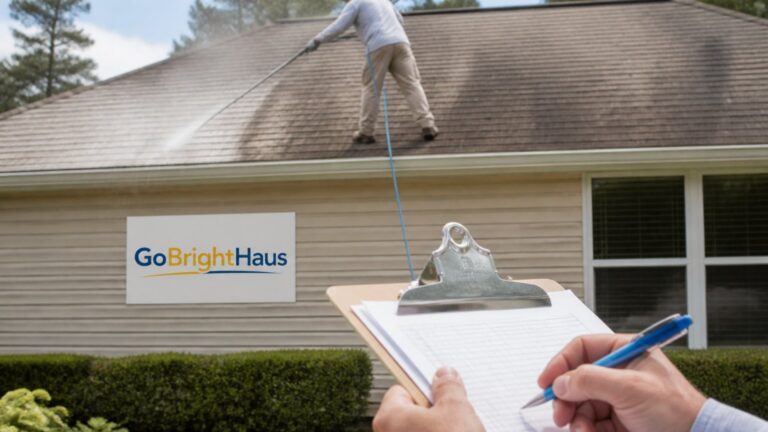
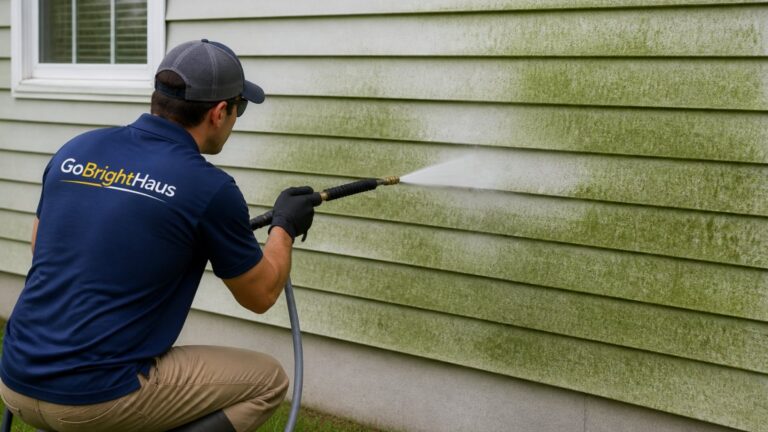
The key difference between soft washing and pressure washing matters here. Soft washing uses low-pressure water mixed with biodegradable cleaning solutions to kill algae, moss, and mold at the root. Pressure washing blasts away surface debris but leaves spores behind, so growth returns faster.
Understanding what affects longevity can help extend a roof’s clean appearance significantly. The timeline depends less on the cleaning method itself and more on what happens after. Your roof’s exposure to moisture, shade, and debris determines how quickly new growth takes hold.
Factors That Affect How Long Your Results Stay Clean
Not every roof stays clean for the same length of time. Several conditions work together to either preserve your soft wash results or speed up regrowth. Understanding these factors helps you plan maintenance and protect your investment.
Climate and Weather Exposure
Charlotte’s humid subtropical climate accelerates algae and moss growth year-round. High humidity, frequent rain, and warm temperatures create perfect conditions for spores to settle and multiply on your shingles.
Roofs facing north or northwest tend to stay wet longer and receive less direct sunlight. These areas stay damp, which feeds algae growth. South-facing roofs dry faster and see less regrowth because sunlight naturally inhibits spore development.
Winter and spring bring the most growth pressure in Charlotte. Cooler temperatures and increased moisture create a window where algae thrives. By late spring, many homeowners notice the first dark streaks returning.
Roofs in areas with heavy rainfall see faster regrowth than those in drier regions. Each rain event deposits new spores and creates moisture that feeds existing growth.
Roof Material and Age
Asphalt shingles hold moisture longer than metal or tile roofs, which means algae finds a better home on asphalt. The porous surface traps water and organic debris, creating ideal breeding grounds for growth.
Older shingles lose their protective granule coating over time. Bare spots become more vulnerable to staining and algae colonization. A 15-year-old roof will show regrowth faster than a 5-year-old one after cleaning.
Darker shingles absorb more heat, which can slow algae growth slightly. Light-colored shingles stay cooler and damper, creating conditions where growth returns more aggressively.
Composite materials like architectural shingles have textured surfaces that trap debris and moisture. This texture makes them more susceptible to regrowth than smooth, traditional shingles.
Surrounding Trees and Shade
Overhanging branches create constant shade and moisture on your roof. Leaves drop onto shingles, decompose, and feed algae growth. Trees also block air circulation, preventing your roof from drying quickly after rain.
Evergreen trees are particularly problematic. They shed needles year-round, and their dense canopy keeps your roof perpetually damp. Deciduous trees help in winter when they lose their leaves, but they’re aggressive contributors during growing season.
Trees within 15 to 20 feet of your roof create enough shade to impact growth rates. The closer the tree, the faster regrowth happens after cleaning.
Proximity to wooded areas also matters. Spores travel through the air and settle on nearby roofs. Homes surrounded by forest will see faster regrowth than those in open neighborhoods.
How Often to Clean a Roof for Best Results
Most homeowners in Charlotte benefit from cleaning every 12 to 18 months. This schedule keeps algae and moss from establishing deep colonies that become harder to remove.
If your roof has heavy tree coverage or faces north, consider cleaning every 12 months. The extra moisture and shade justify the more frequent maintenance.
Roofs with minimal shade and good sun exposure can stretch to 24 months between cleanings. These properties dry quickly and see slower regrowth naturally.
After a soft wash cleaning, monitor your roof through the first year. Take photos from the ground every few months.
Preventive cleaning is cheaper than letting growth accumulate. A roof with heavy buildup takes longer to clean and risks more damage during the process.
Most Charlotte homeowners benefit from a cleaning schedule based on their roof’s sun exposure and tree coverage.
| Roof Condition | Recommended Frequency | Notes |
|---|---|---|
| Heavy tree coverage or north-facing | Every 12 months | Extra moisture and shade justify more frequent maintenance |
| Minimal shade and good sun exposure | Every 24 months | Dries quickly and sees slower regrowth naturally |
| Average Charlotte conditions | Every 12 to 18 months | Standard schedule for most homeowners |
How to Prevent Algae on Roof Shingles Between Cleanings
Several practical steps slow down algae and moss growth between professional cleanings. These methods work best when combined rather than used alone.
Zinc and Copper Strips
Installing zinc or copper strips along your roof ridge creates a natural algae barrier. When rain washes over these metals, it carries zinc or copper particles down the roof surface. These particles inhibit algae spore germination and slow growth significantly.
Strips cost relatively little and last for years. They’re installed along the peak of your roof and require no maintenance. Rain does the work for you.
The effect isn’t immediate. Strips typically reduce regrowth by 50 to 70 percent, but they work gradually over weeks. They prevent new growth more effectively than they remove existing algae.
Proper Ventilation and Drainage
A well-ventilated attic pulls moisture out of your roof structure. Poor ventilation traps heat and humidity, creating a damp environment where algae thrives.
Check your soffit vents and roof vents to ensure they’re clear. Blocked vents prevent air circulation. Proper airflow keeps shingles drier between rain events.
Gutters clogged with debris hold water against your roof edge. Clean gutters regularly and ensure downspouts direct water at least 4 to 6 feet away from your foundation. Standing water on or near your roof accelerates growth.
Roof valleys should slope toward gutters without obstruction. Leaves and debris that accumulate in valleys trap moisture and feed algae growth.
Trimming Overhanging Branches
Cut back tree branches that hang over your roof or create heavy shade. This single step often produces the biggest improvement in growth rates.
Branches within 6 to 8 feet of your roof should be trimmed. This distance reduces debris falling directly onto shingles and allows more sunlight and air circulation.
Remove dead branches and diseased trees near your home. Dead wood is more likely to drop limbs onto your roof, and it sheds more debris overall.
Trimming also improves your home’s appearance and reduces gutter maintenance. You’re solving multiple problems at once.
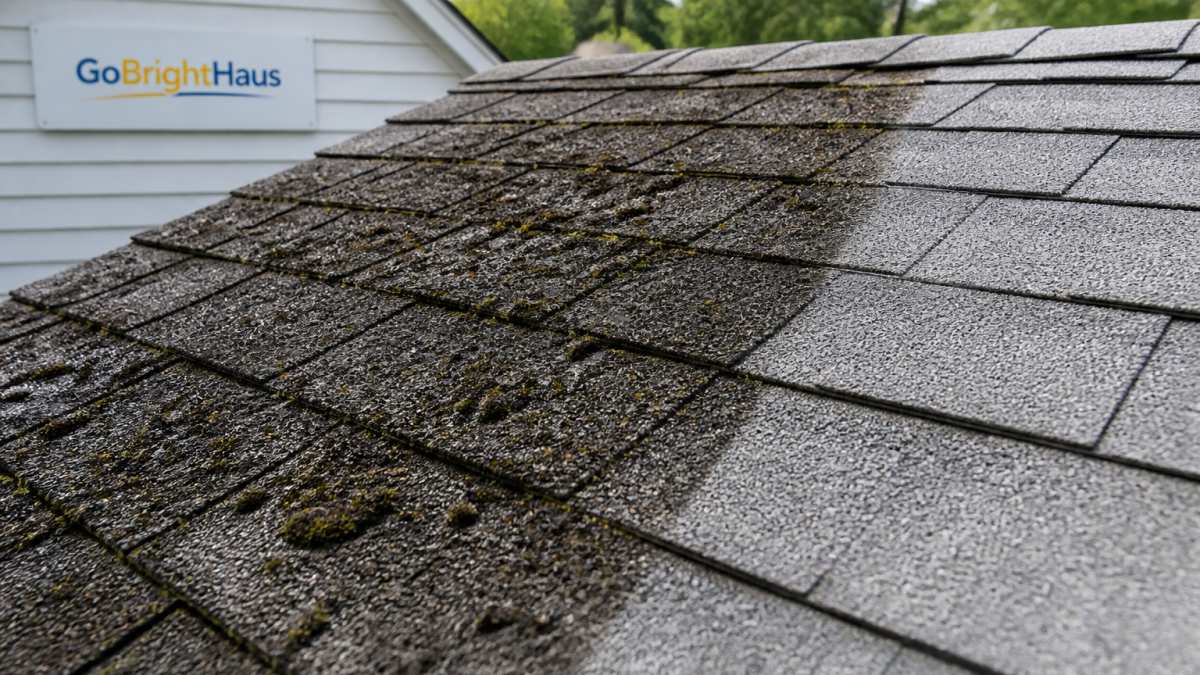
Soft Washing vs Pressure Washing a Roof: Which Lasts Longer
Soft washing results last significantly longer than pressure washing. The difference comes down to how each method works and what it leaves behind.
Pressure washing uses 1,500 to 4,000 PSI of force to blast away surface stains.
Soft washing applies a biodegradable cleaning solution that kills algae at the cellular level. The solution penetrates into shingles and eliminates spores before they regrow.
Pressure washing also risks shingle damage. High-pressure water can strip granules, create leaks, and shorten your roof’s lifespan. Soft washing is gentler and safer for older or delicate roofing materials.
The upfront cost of soft washing is higher, but the extended results make it more economical over time. You’re paying more per cleaning but cleaning less frequently.
EPA guidance on safe roof cleaning practices recommends methods that protect water quality and your home’s structural integrity. Soft washing aligns with these recommendations better than high-pressure alternatives.
Signs Your Roof Needs Cleaning Again
Dark streaks or patches appearing on your shingles signal that algae is returning. Learn what causes these marks and when to schedule your next cleaning. These typically start in shaded areas or near the roof’s edge where moisture lingers.
Moss growth looks different from algae. It appears as fuzzy green patches, often in thick clumps. Moss grows faster in cool, damp climates like Charlotte’s and indicates your roof needs attention soon.
Discolored sections that spread across large roof areas mean growth is accelerating. Early treatment stops it before it becomes severe.
If you notice dark staining that wasn’t visible a few weeks ago, schedule a professional inspection. Catching growth early makes cleaning easier and more affordable. Go Bright Haus roof soft washing and care services can assess your roof and recommend the right timing for your next cleaning.
Gutters filled with organic debris, leaves, moss fragments, or algae residue, also signal that your roof is accumulating growth. Clean gutters protect your roof and help you spot problems early.
Extending Your Soft Wash Results
Getting the most from your soft wash cleaning requires attention to conditions between visits. Small actions compound into longer-lasting results.
Keep gutters clean year-round. Debris traps moisture and feeds algae growth. Clear gutters every spring and fall, and after heavy storms.
Improve airflow around your roof by trimming trees regularly. Better circulation helps shingles dry faster after rain, which slows algae development.
Consider installing zinc and copper strips to prevent moss growth on your roof. These passive systems work continuously without additional effort from you.
Monitor your roof after cleaning. Understanding roof soft wash costs helps you budget for the right cleaning frequency based on your roof’s durability and conditions. Take photos every few months to track growth patterns.
If your roof has persistent issues despite preventive measures, professional guidance on DIY vs professional soft washing can help you decide whether a different approach makes sense for your specific situation.
Conclusion
How long roof soft washing lasts depends on Charlotte’s climate, your roof’s exposure to shade and moisture, and the preventive steps you take between cleanings. Most homeowners see clean results for 12 to 18 months, with soft washing outlasting pressure washing by months or years because it kills algae at the source rather than just removing surface stains.
The real investment isn’t just in the cleaning itself, it’s in understanding what drives regrowth and acting on it. Trimming trees, maintaining gutters, and installing zinc strips all work together to extend your results. Get a quote from Go Bright Haus and let our Charlotte team assess your roof’s specific needs. We’ll recommend a cleaning schedule and prevention strategy designed to keep your roof looking its best for as long as possible.
Frequently Asked Questions
How long do the results of roof soft washing typically last?
The exact duration of roof soft washing results depends on your local climate, roof material, tree coverage, and how much shade your roof receives. Homes in humid environments with heavy tree coverage may see algae return sooner, while dry climates can extend results.
How often should you soft wash a roof?
If you notice algae or moss returning, schedule cleaning. Properties with significant shade from trees, high humidity, or northern-facing slopes may need more frequent cleanings. A professional can assess your specific conditions and recommend a maintenance schedule.
What’s the difference between soft washing and pressure washing a roof?
Soft washing uses low-pressure water combined with specialized cleaning solutions to remove algae and moss without damaging shingles. Pressure washing relies on high-pressure water jets that can strip protective granules, void warranties, and shorten shingle lifespan. Soft washing results also last longer, while pressure washing provides only immediate surface cleaning.
Can I prevent algae from returning to my roof after soft washing?
Yes. Install zinc or copper strips along the roof ridge to inhibit algae growth. Keep gutters clean and ensure proper roof ventilation to reduce moisture. Trim tree branches overhanging your roof to minimize shade and improve air circulation. These preventive steps can extend the time between cleanings and reduce the speed at which algae returns.