
Table of Contents
- Why Pressure Washing Alternatives Matter for Wood Decks
- Soft Washing Wood Decks: A Safer Cleaning Method
- Best Wood Deck Cleaner for Mold and Mildew Removal
- How to Scrub a Deck Without Damaging Wood
- Comparison of Deck Cleaning Methods
- When to Call a Professional vs. DIY Cleaning
- Protecting Your Wood Deck Long-Term
- Conclusion
- Frequently Asked Questions
Last Updated: October 20, 2026
Why Pressure Washing Alternatives Matter for Wood Decks
Your wood deck is an investment in your home’s curb appeal and outdoor living space. Pressure washing alternatives for wood decks protect that investment while delivering the clean surface you want. Many homeowners assume pressure washing is the only way to restore a grimy deck, but high-pressure water can strip stain, damage wood fibers, and create costly repairs down the line.
Many Charlotte homeowners have discovered this the hard way, calling us after a contractor’s pressure washer left their deck looking bleached and splintered. The real problem isn’t that pressure washing doesn’t work, it’s that it’s too aggressive for most wood surfaces.
The good news: gentler methods exist and often deliver better results. Soft washing, chemical cleaners, and manual scrubbing can remove mold, mildew, and grime without compromising the wood’s integrity. These pressure washing alternatives for wood decks cost less to repair afterward and leave your deck looking naturally restored rather than stripped bare.
Start with the gentlest method first. If soft washing removes the dirt, you’ve avoided unnecessary damage. You can always escalate to stronger approaches, but you can’t undo pressure washer damage.
Soft Washing Wood Decks: A Safer Cleaning Method
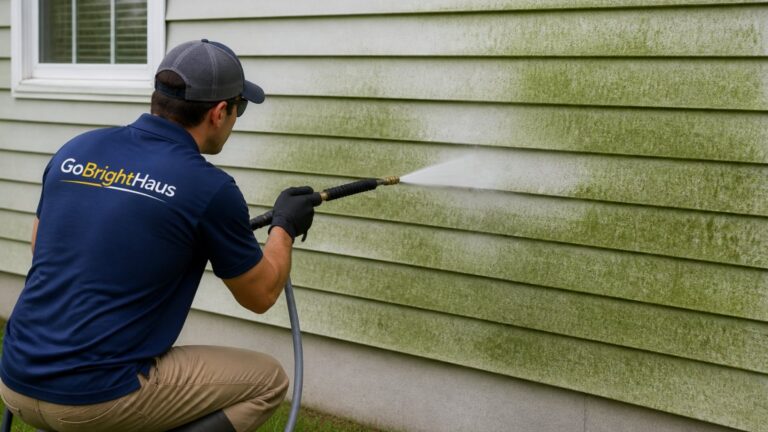
Soft washing is the professional standard for cleaning wood surfaces, and it’s the approach we recommend to most Charlotte property owners. Unlike pressure washing, soft washing uses low-pressure water combined with biodegradable cleaning solutions to break down organic growth and stains without damaging the wood.
The process works by letting chemistry do the work instead of force. A specialized cleaner targets mold, mildew, and algae at the root level. The solution sits on the surface for 10-20 minutes, allowing it to penetrate and kill the organisms. Then low-pressure rinse removes the dead growth and cleaner residue. The wood stays intact, the stain remains protected, and the results look natural.
Soft washing wood decks is ideal for older decks, stained surfaces, and any situation where wood preservation matters more than speed. The wood stays healthy and the finish stays intact.
The main limitation: soft washing won’t remove heavy buildup or deeply embedded dirt as quickly as pressure washing might. For decks with years of neglect, you may need to let the cleaner work longer or apply multiple treatments.
Best Wood Deck Cleaner for Mold and Mildew Removal
When mold and mildew are your main problem, the right cleaner makes all the difference. Oxygen-based cleaners like OxiClean work by releasing oxygen bubbles that break down organic stains without the harshness of bleach. These cleaners are safer for the wood, safer for surrounding plants, and effective on most mold and mildew problems.
Products specifically formulated for wood decks, such as Restore-A-Deck, DEFY Wood Cleaner, and similar oxygenated formulas, offer targeted results. These come in powder or liquid form and are designed to work with manual scrubbing or soft washing systems. They target the organisms causing discoloration without stripping the protective stain layer.
For severe mold, a best wood deck cleaner for mold should contain a mild fungicide component. Many oxygen-based products include this. The cleaner kills the mold spores so they don’t return as quickly, and the oxygen action lifts the dark staining left behind.
Bleach-based cleaners kill mold fast but damage wood over time. They break down lignin, the natural binding agent in wood, leaving the surface soft and prone to splinters. Avoid them unless your deck is bare wood with no stain to protect.
Application matters as much as the product. Mix the cleaner according to directions, apply it evenly across the deck, and let it sit. Most effective wood deck cleaners need 15-30 minutes of contact time to work. Then scrub lightly with a soft brush and rinse thoroughly. This approach removes mold without the risk that pressure washing introduces.
How to Scrub a Deck Without Damaging Wood
Scrubbing by hand is slower than pressure washing, but it gives you control and produces excellent results when done correctly. The key is using the right tools and technique so you clean without gouging or splintering the wood.
Step-by-Step Manual Cleaning Process
Step 1: Clear and Prepare the Deck
Remove furniture, planters, and debris. Sweep the surface thoroughly to eliminate loose dirt and leaves. This prevents you from grinding abrasive particles into the wood as you scrub.
Step 2: Apply Your Chosen Cleaner
Mix your oxygen-based deck cleaner or soft-washing solution according to product directions. Apply it evenly across the deck surface using a pump sprayer or garden sprayer. Start in one corner and work systematically across the deck. Avoid oversaturating, you want the wood damp, not pooling with liquid.
Step 3: Let the Cleaner Work
This is where patience saves your wood. Allow 15-30 minutes of contact time. The cleaner needs time to penetrate and break down mold, mildew, and organic stains. Set a timer so you don’t forget.
Step 4: Scrub with Soft Bristles
Use a soft-bristled deck brush, not a wire brush. Wire brushes gouge wood fibers and create splinters. Work in the direction of the wood grain, using moderate pressure. You’re helping the cleaner do its job, not trying to sand the deck clean. Scrub in overlapping strokes, about 2-3 passes per section.
Step 5: Rinse Thoroughly
Rinse the entire deck with a garden hose at normal pressure. Use a fan nozzle, not a concentrated stream. Work from one end to the other, ensuring all cleaner residue is removed. Incomplete rinsing leaves a film that dulls the wood and can attract dirt.
Step 6: Allow Drying Time
Let the deck dry completely before walking on it or replacing furniture. This typically takes 24-48 hours depending on humidity and weather. Damp wood is soft and prone to damage.
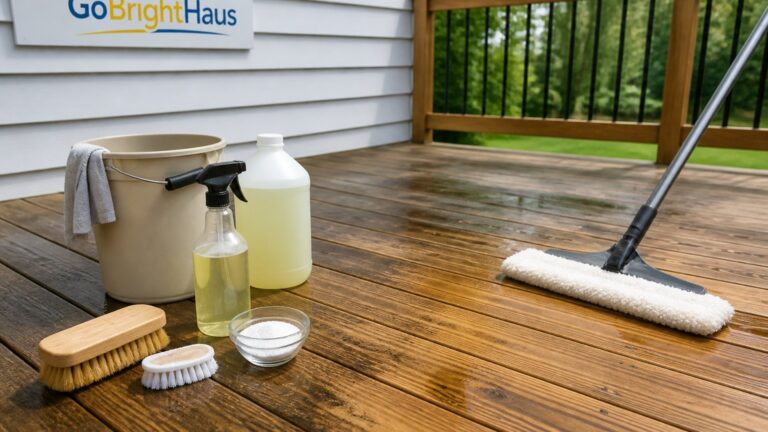
Tools and Materials You’ll Need
| Item | Purpose | Notes |
|---|---|---|
| Soft-bristled deck brush | Gentle scrubbing without gouging | Essential, never use wire brushes |
| Oxygen-based cleaner | Breaks down mold and mildew | Follow product mixing instructions |
| Pump or garden sprayer | Even application of cleaner | 1-2 gallon capacity is standard |
| Garden hose with fan nozzle | Low-pressure rinsing | Avoid concentrated spray patterns |
| Work gloves | Hand protection during mixing and scrubbing | Chemical-resistant if using strong cleaners |
| Safety glasses | Eye protection from splashing cleaner | Optional but recommended |

Comparison of Deck Cleaning Methods
Different cleaning approaches have different strengths. The best choice depends on your deck’s condition, age, and what you’re trying to achieve.
| Method | Best For | Time Required | Cost | Risk to Wood |
|---|---|---|---|---|
| Soft washing | Mold, mildew, stained decks | 4-8 hours | Professional service | Very low |
| Manual scrubbing with cleaner | Moderate dirt, homeowner control | 6-10 hours | DIY supplies | Low |
| Pressure washing | Heavy buildup, bare wood | 2-4 hours | Professional or rental | High |
| Oxygen-based cleaner alone | Light cleaning, prevention | 2-3 hours | Cleaner cost only | Very low |
Soft washing remains a highly effective method for wood deck cleaning in Charlotte because it handles our humid climate’s mold and mildew growth without damaging the underlying wood. Manual scrubbing with the right cleaner comes in a close second if you prefer DIY and have the time.
Pressure washing works best for concrete, pavers, and composite decking, not wood. If you have a wood deck and someone recommends pressure washing, get a second opinion before proceeding.
When to Call a Professional vs. DIY Cleaning
The decision between DIY and professional cleaning comes down to three factors: deck condition, your physical ability, and how much risk you’re willing to accept.
Call a professional if your deck shows any of these signs:
- Visible mold or mildew that covers more than 20% of the surface
- The wood feels soft or spongy when you press it (possible rot)
- Stain is peeling or flaking (requires professional restoration)
- The deck is elevated more than 4 feet high (safety concern)
- You’re unsure whether your deck is wood or composite
DIY cleaning works well if your deck is structurally sound, the dirt is mostly surface-level, and you’re comfortable spending a full day on the project. You’ll save money on labor, and you control the timeline.
Go Bright Haus handles deck cleaning for Charlotte homeowners who want professional results without the risk. Our soft washing approach removes mold and mildew while preserving your deck’s finish and structural integrity. We’re fully insured, so if anything goes wrong, you’re protected.
Professional cleaning can prevent expensive repairs down the road. Soft washing is a safer investment.
Protecting Your Wood Deck Long-Term
Cleaning is only half the battle. Protecting your deck after cleaning ensures your investment lasts years longer and requires less frequent deep cleaning.
After your deck is clean and dry, apply a quality wood sealant or stain. This creates a barrier against moisture, UV damage, and the mold spores that cause regrowth. In Charlotte’s humid climate, resealing every 2-3 years is standard maintenance. Without it, mold returns within months.
Regular maintenance between deep cleanings keeps your deck healthier. Sweep monthly to remove leaves and debris. Rinse with a garden hose after heavy rain or visible dirt buildup. These simple steps prevent organic growth from taking hold and reduce the need for aggressive cleaning later.
Trim nearby trees and shrubs to improve air circulation. Shade and moisture create ideal conditions for mold. Better airflow dries the deck faster after rain, reducing mold risk.
Consider a professional inspection every 2-3 years. Early detection of soft spots, rot, or structural issues prevents costly damage.
Conclusion
Pressure washing alternatives for wood decks protect your investment while delivering cleaner results. Soft washing, oxygen-based cleaners, and careful manual scrubbing remove mold and grime without the damage that high-pressure water causes. For Charlotte homeowners with wood decks, these gentler methods are the professional standard because they work with the wood instead of against it.
If your deck needs cleaning and you want to avoid the risk of pressure washer damage, Go Bright Haus is ready to help. Our soft washing process removes mold, mildew, and stains while preserving your deck’s finish and structural integrity. We’re fully insured professionals serving the greater Charlotte area with the expertise to handle any wood deck safely. Get a Quote today and discover why many Charlotte homeowners trust us with their most valued outdoor spaces.
Frequently Asked Questions
Can you clean a wood deck without a pressure washer?
Yes. Pressure washing alternatives for wood decks include soft washing, chemical cleaners, and manual scrubbing with brushes. These methods remove dirt, mold, and mildew while protecting the wood from damage. Soft washing uses low-pressure water combined with specialized cleaning solutions, making it safer than high-pressure equipment that can strip stain or gouge the surface.
What is the best wood deck cleaner for mold?
Oxygen-based cleaners like OxiClean work well for mold removal without harming wood. Products containing sodium percarbonate break down mold and mildew effectively. For stubborn mold growth, professional soft washing services can apply specialized fungicides that penetrate deep into wood fibers. Always test any cleaner on an inconspicuous area first to ensure it won’t discolor your stain.
Does pressure washing damage wood deck boards?
High-pressure washing can damage wood decks by stripping protective stain, gouging the surface, or forcing water deep into the wood where it causes rot. Pressure above 1500 PSI poses significant risk to most wood surfaces. This is why pressure washing alternatives like soft washing and manual cleaning are recommended for preserving deck integrity and appearance.
How often should I clean my wood deck in the North Carolina climate?
In North Carolina’s humid subtropical climate, wood decks benefit from cleaning 1-2 times per year. Spring cleaning removes winter debris and mold, while fall cleaning prepares the deck for moisture-heavy winter months. Regular maintenance prevents mold and mildew from becoming severe problems that require more aggressive cleaning methods.