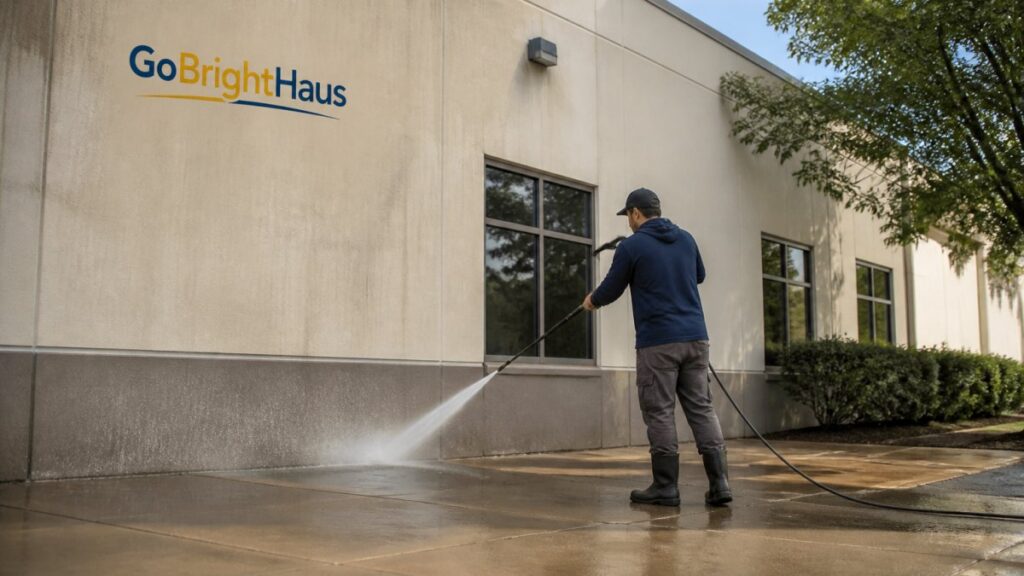
Last Updated: October 22, 2026
Quick Summary
Commercial buildings in Charlotte should be soft washed every 12 to 18 months, on average. For most commercial properties, an annual or twice-yearly wash keeps surfaces clean and protected, though buildings in heavy shade or near trees may need it more often.
- Charlotte’s humid summers and frequent rain feed organic growth fast, especially on north-facing walls.
- Stucco and EIFS are porous and prone to algae streaks, while brick and masonry trap pollution.
- If you spot two or more warning signs, don’t wait to schedule a wash.
- Soft washing uses low pressure and cleaning solutions, making it safer than pressure washing for commercial exteriors.
- Photograph the same wall corners and shaded spots every visit to track how fast growth returns.
Table of Contents
- How Often Should Commercial Buildings Be Soft Washed?
- Key Factors That Affect Your Soft Washing Frequency
- Signs a Commercial Building Needs Washing
- Soft Washing vs Pressure Washing for Commercial Buildings
- Building a Commercial Building Washing Schedule
- How to Choose Soft Washing Companies Near Me
- Conclusion
- Frequently Asked Questions
How Often Should Commercial Buildings Be Soft Washed?
Commercial buildings in Charlotte should be soft washed every 12 to 18 months, on average. That single number answers the question most property managers ask us first. But here’s what most guides get wrong: the calendar matters less than the building itself. A stucco office building on a shaded lot needs a different rhythm than a brick warehouse in full sun. A fixed schedule applied blindly wastes money and still leaves grime behind.
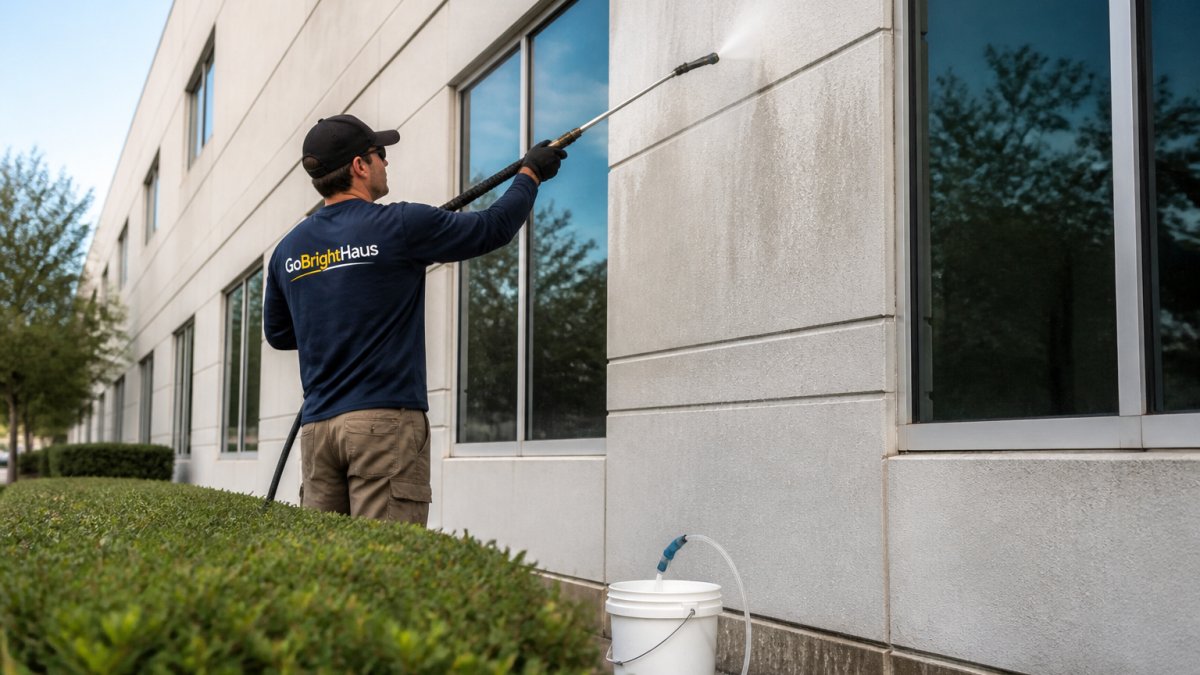
The Short Answer: Every 12 to 18 Months
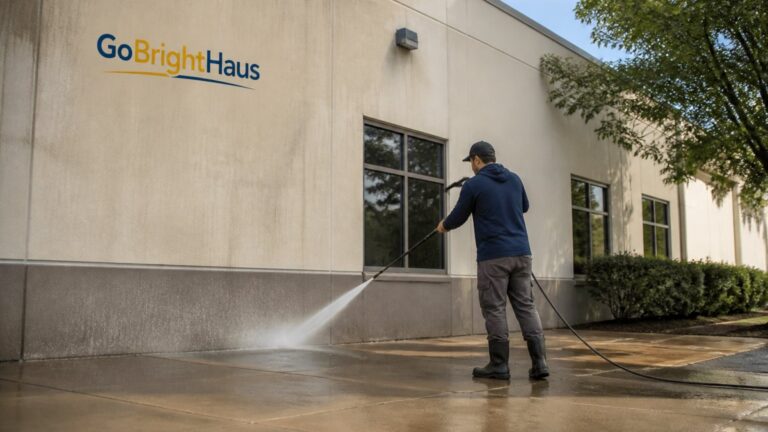
Soft washing is a low-pressure cleaning method that uses specialized solutions to kill mold, mildew, and algae at the root rather than blasting them off with force. For most commercial properties, an annual or twice-yearly wash keeps surfaces clean and protected. Buildings in heavy shade or near trees may need it more often.
Why the Schedule Varies by Building
No two commercial properties age the same way. A building’s exposure to moisture, sun, and pollution sets its own clock. We’ve seen buildings that look rough after a year and others that hold up for two. The variables below explain the gap.
Key Factors That Affect Your Soft Washing Frequency
Your building’s surroundings and materials decide how fast it gets dirty. These are the three factors we check before recommending a schedule.
Climate and Local Conditions
Charlotte’s humid summers and frequent rain feed organic growth fast. North Carolina’s warm, wet climate encourages mold and algae on north-facing walls. Properties near creeks or in low-lying areas stay damp longer, so they need more frequent cleaning.
Building Material and Height
Different surfaces collect grime at different rates:
- Stucco and EIFS: Porous and prone to algae streaks
- Brick and masonry: Holds up well but traps pollution
- Vinyl and metal siding: Shows dirt quickly but cleans easily
- Tall buildings: Upper floors catch wind-driven rain and pollution
Height also affects access and cost, so taller buildings often get washed on a longer cycle.
Surrounding Environment and Use
A restaurant with grease exhaust, a building beside a busy road, or one under heavy tree cover all collect grime faster. Parking garages and industrial sites need more attention. Quiet suburban offices need less.
Signs a Commercial Building Needs Washing
Look for visible clues rather than waiting for the calendar. These signs mean it’s time to schedule a wash:
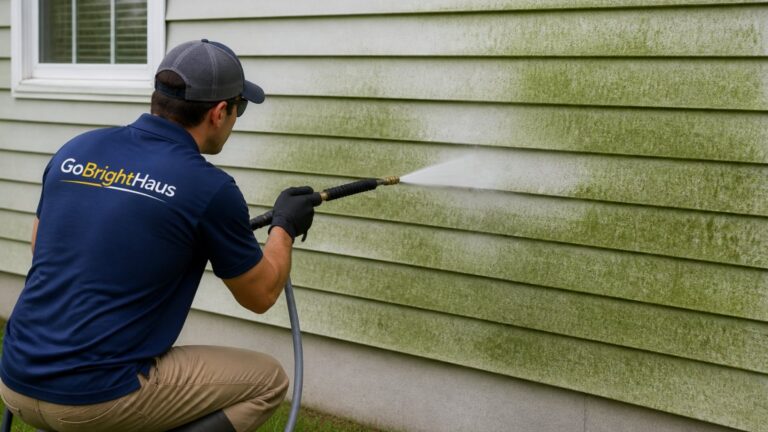
- Green or black streaks on walls and siding
- Dark patches on north-facing surfaces
- Chalky residue or fading paint
- Stained walkways and entryways
- Musty smells near the building
- Visible mold on awnings or trim
If you spot two or more of these, don’t wait. Organic growth spreads and can damage surfaces over time.
Soft Washing vs Pressure Washing for Commercial Buildings
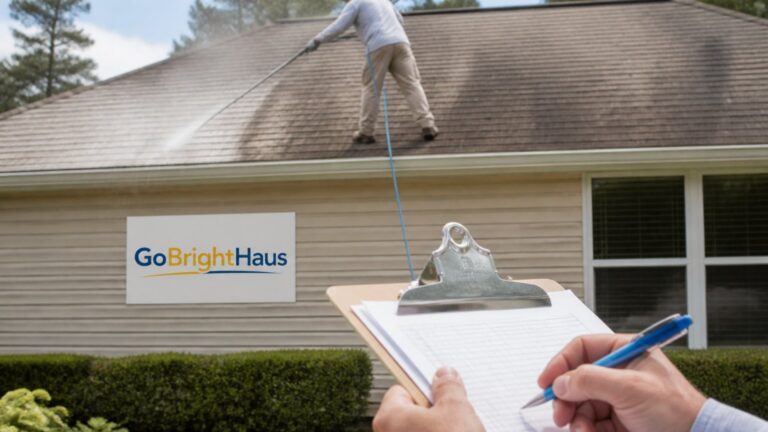
Soft washing and pressure washing are not the same tool. Soft washing uses low pressure and cleaning solutions to kill organic growth. Pressure washing uses high force to blast dirt away. For commercial exteriors, soft washing is usually the safer choice.
High pressure can crack stucco, force water behind siding, and strip paint. It can also damage seals around windows. Soft washing protects the surface while still removing mold and algae. For delicate materials, soft washing wins almost every time.
Using high pressure on stucco, EIFS, or older wood can force water behind the surface and cause hidden rot. The damage often shows up months later, long after the crew is gone.
Building a Commercial Building Washing Schedule
A written schedule keeps your property clean and your budget predictable. Here’s how we build one for a commercial client.
Sample Annual Schedule
| Season | Task | Frequency |
|---|---|---|
| Spring | Full soft wash of all exterior walls | Once |
| Summer | Spot-treat north-facing walls and shaded areas | As needed |
| Fall | Clean gutters, walkways, and entryways | Once |
| Winter | Inspect for mold and plan next year’s wash | Once |
What to Include in a Maintenance Plan
A solid plan covers more than washing. Include these items:
- A full exterior wash on a set cycle
- Spot treatments for shaded or problem areas
- Walkway and entryway cleaning
- Gutter and downspout checks
- Photo records before and after each visit
Documenting each visit helps you spot trends and prove upkeep to tenants or owners.
Photograph the same wall corners and shaded spots every visit. Comparing photos over time shows exactly how fast your building collects growth, so you can adjust the schedule instead of guessing.
How to Choose Soft Washing Companies Near Me
Choosing a soft washing company near me comes down to proof, not price. Ask for insurance, references, and a clear scope of work before you hire anyone.
Here’s what to check:
- Insurance: Ask for a certificate of insurance
- References: Request recent commercial clients you can call
- Scope: Get a written plan of what gets washed
- Products: Ask what solutions they use on your surfaces
- Safety: Confirm they handle height and access safely
Cheap quotes often skip insurance or rush the job. That risk lands on you. Our team is fully insured and treats every property like our own. We serve the greater Charlotte area with soft washing, pressure cleaning, and concrete solutions.
The right soft washing company proves its insurance and references before you sign. Price matters, but an uninsured crew can cost far more in damage.
Conclusion
Keeping a commercial building clean takes a real schedule, not a one-time wash. Match your cycle to your climate, materials, and surroundings, and watch for the warning signs before damage spreads. Go Bright Haus offers fully insured soft washing, pressure cleaning, and concrete solutions for commercial properties across Charlotte. Get a quote today and protect your building’s curb appeal year-round.
Frequently Asked Questions
How often should a commercial building be soft washed?
Most commercial buildings should be soft washed every 12 to 18 months. Buildings in humid climates or near trees may need it every 6 to 12 months. The right interval depends on your siding material, local weather, and how much dirt and organic growth the building collects. A professional soft washing company can assess your property and recommend a schedule.
Is soft washing safe for commercial building siding?
Yes, soft washing is safe for most commercial siding, including vinyl, stucco, brick, and painted wood. It uses low pressure and specialized cleaning solutions to kill mold, mildew, and algae without damaging the surface. High pressure can force water behind siding and strip paint, so soft washing is the preferred method for delicate exteriors.
How do I know when my commercial building needs soft washing?
Look for dark streaks on siding, green or black patches on north-facing walls, chalky residue, or dirt buildup around entryways. These are signs a commercial building needs washing. If you notice these signs before your scheduled wash, move the appointment up. Regular inspections help you catch problems early.
Can commercial buildings be soft washed during business hours?
Many soft washing companies can work around your business hours, including early mornings, evenings, or weekends. Soft washing is low-pressure and relatively quiet, so it often causes minimal disruption. Ask the company about scheduling flexibility and whether they can section off areas to keep entrances open.
Ready to set a cleaning schedule that fits your property? Get a quote from Go Bright Haus and let our local team handle the rest.