
Table of Contents
- Why Green Algae Grows on House Siding
- What You’ll Need Before You Start
- Step 1: Prep the Area and Protect Your Plants
- Step 2: Apply the Best Cleaner for Algae on Siding
- Step 3: Pressure Washing vs. Soft Washing Siding
- Step 4: Rinse, Inspect, and Repeat if Needed
- How to Prevent Algae on House Siding
- When to Call Professional House Washing in Charlotte, NC
- Frequently Asked Questions
Last Updated: October 21, 2026
Why Green Algae Grows on House Siding
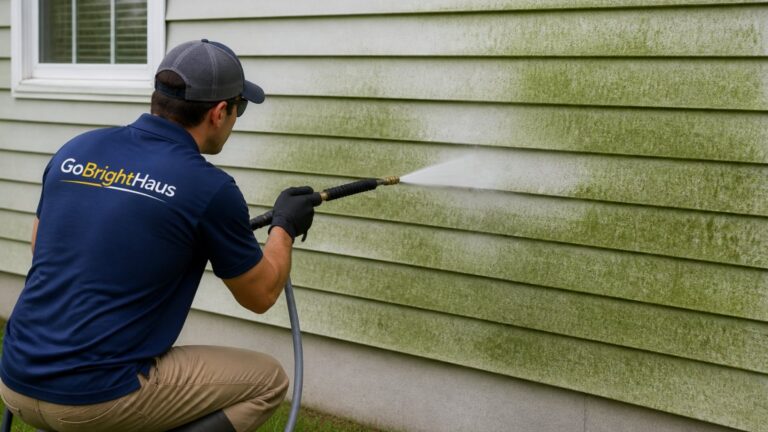
Green algae on siding is a simple plant problem, not a sign your house is falling apart. Algae is a living organism that feeds on moisture, dust, and organic debris that settles on exterior surfaces. It shows up as a green film or streaky stain, usually on the north and east sides of a home.
Charlotte’s humid summers and frequent rain create ideal growing conditions. Shaded walls stay damp longer. That trapped moisture lets spores take hold and spread.
Here’s what most guides miss: the green film is often feeding on pollen and dust that cling to the siding, not on the siding itself. Kill the food source and dry the surface, and the algae stops returning.
- Shade: North-facing walls dry slowly
- Moisture: Leaky gutters and splash-back keep walls wet
- Food: Pollen, dust, and tree debris
- Heat and humidity: Warm, muggy air speeds growth
The good news is that algae is far easier to remove than mold or mildew, and the fix is straightforward if you use the right method.
What You’ll Need Before You Start
Gather your supplies first so you’re not stuck halfway up a ladder. A common mistake is starting without eye protection or plant cover, then scrambling once the cleaner is already mixed.
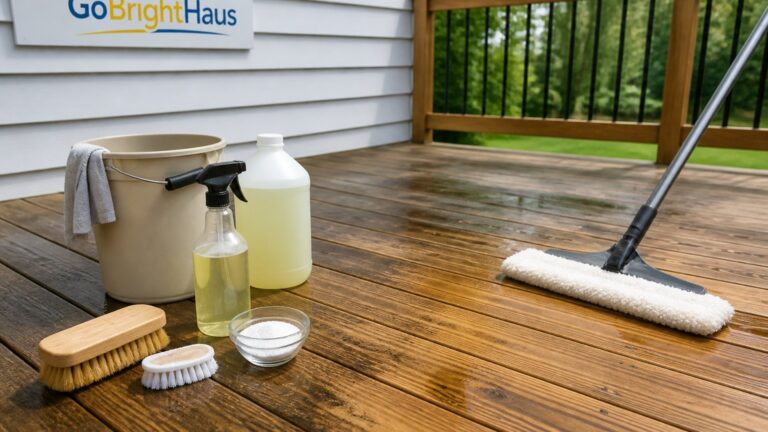
- Pump sprayer or garden sprayer
- Oxygen bleach or a siding-safe algae cleaner
- Soft-bristle brush with an extension pole
- Garden hose with a spray nozzle
- Safety glasses and rubber gloves
- Drop cloths or plastic sheeting for plants
- Ladder with stable footing
Skip the household chlorine bleach if you can. It can dull vinyl and damage nearby landscaping. An oxygen-based cleaner is gentler on siding and plants.
Never mix bleach with ammonia or other cleaners. The fumes are toxic. Pick one cleaner, use it as directed, and rinse thoroughly.
Step 1: Prep the Area and Protect Your Plants
Protection comes before cleaning. Wet down plants and shrubs near the wall, then cover them with plastic sheeting. This keeps runoff from burning leaves.
Move patio furniture, grills, and decorations out of the splash zone. Close windows and doors tight. Cover exterior outlets.
Check the weather. Pick a mild, overcast day with no rain in the forecast for 24 hours. Direct hot sun can dry cleaner onto the siding before it works.
- Soak plants and cover them
- Move furniture and close windows
- Work top to bottom
- Keep pets and kids indoors
Step 2: Apply the Best Cleaner for Algae on Siding
The best cleaner for algae on siding is an oxygen-based or siding-specific solution mixed to the label’s ratio. These cleaners lift the green film without bleaching vinyl or harming plants the way harsh chlorine can.
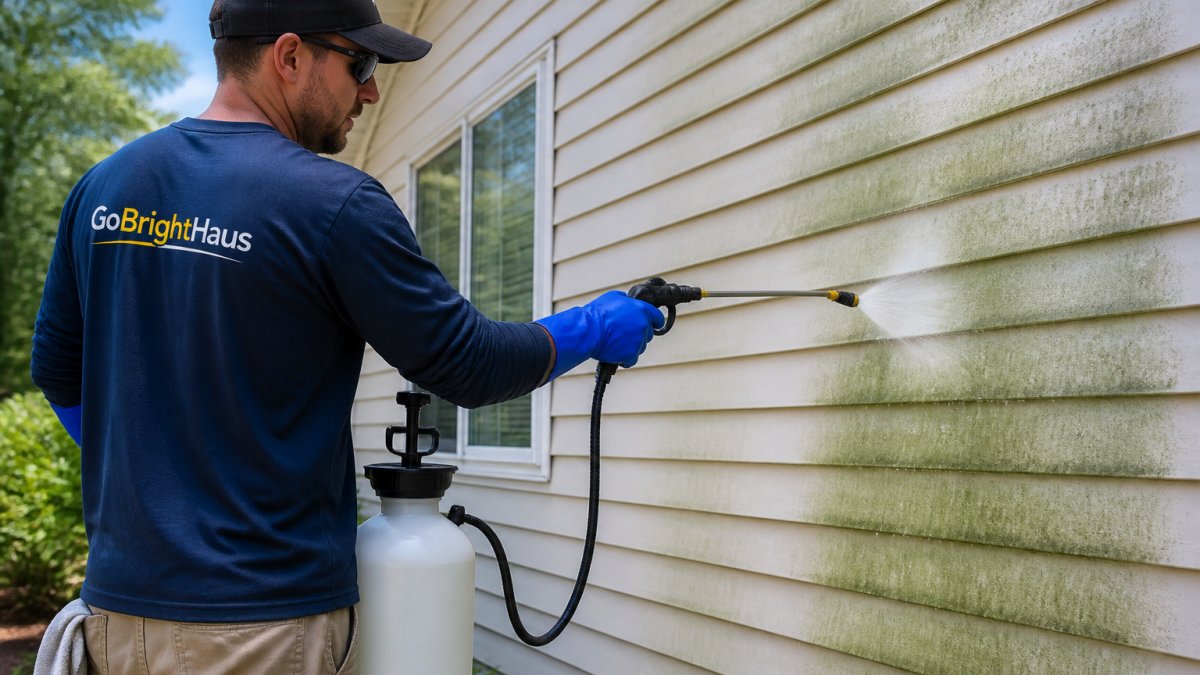
Mix the cleaner in your sprayer per the label. Most products call for a dilution with water. Never guess the ratio.
Apply from the bottom up. Start low and work upward so cleaner doesn’t streak down over dry areas. Let it dwell for the time the label states, usually a few minutes. Don’t let it dry on the surface.
- Test a small hidden spot first
- Apply bottom to top
- Respect the dwell time
- Don’t let cleaner dry in the sun
Apply cleaner to a small test patch first, especially on painted or wood siding. Wait for it to dry to confirm the color holds before treating the whole wall.
Step 3: Pressure Washing vs. Soft Washing Siding
Pressure washing vs. soft washing siding comes down to pressure and risk. Pressure washing uses high force that can etch vinyl, strip paint, and force water behind siding. Soft washing uses low pressure and cleaning solution to do the work safely.
For algae removal, soft washing wins almost every time. The cleaner kills the growth, and a gentle rinse carries it away. High pressure just blasts the surface and can drive water into seams where it causes rot and mold later.
| Method | Pressure | Best For | Risk |
|---|---|---|---|
| Pressure washing | High | Concrete, brick, driveways | Can damage siding, paint, wood |
| Soft washing | Low | Vinyl, wood, painted siding | Very low when done right |
If you own a pressure washer, keep the nozzle wide and the wand moving. Never hold it close to siding or aim up under the laps.
Step 4: Rinse, Inspect, and Repeat if Needed
Rinse from the top down with a garden hose. Work in sections so dirty water doesn’t dry and leave streaks. Keep the spray moving and don’t blast into seams.
Let the wall dry fully, then inspect in good light. Light staining often fades as it dries. If green patches remain, apply a second round of cleaner rather than scrubbing harder.
- Rinse top to bottom
- Let the wall dry
- Check shaded corners closely
- Repeat the cleaner, not the pressure
Stubborn spots usually mean the dwell time was too short. Give the cleaner more time to work on the next pass.
How to Prevent Algae on House Siding
Prevention is about cutting moisture and food. If you know how to prevent algae on house siding, you stop repeating this whole job every year.
- Clean gutters so water doesn’t spill down walls
- Trim trees and shrubs to let walls dry
- Fix leaky downspouts and redirect splash-back
- Wash siding once a year before growth spreads
- Add a fresh coat of paint or sealant where it’s worn
A yearly rinse keeps the food source off the surface. In Charlotte’s climate, a spring cleaning pays for itself by heading off bigger growth later.
Algae needs moisture and food to grow. Dry the wall, remove the debris, and clean once a year. That routine beats any single deep clean.
When to Call Professional House Washing in Charlotte, NC
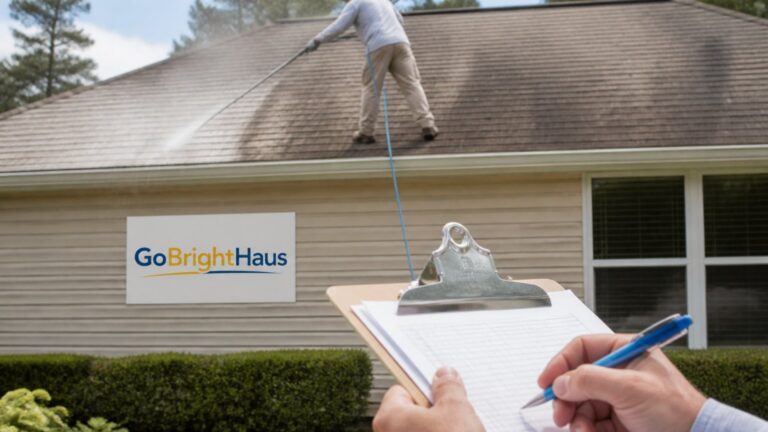
Some jobs are worth handing off. Two-story walls, steep rooflines, and heavy growth call for professional house washing in Charlotte, NC. Ladder work on tall siding is where DIY projects turn dangerous.
We handle soft washing that’s safe for vinyl, wood, and painted surfaces. Our team is fully insured, so your property is protected while we work. We serve homeowners and property managers across the Charlotte area, including commercial buildings that need regular maintenance and safety-compliant cleaning.
If you’ve tried DIY and the green keeps coming back, the issue is usually method, not effort. Reach out to Go Bright Haus for a quote and see the difference a proper soft wash makes.
Frequently Asked Questions
What is the safest way to remove green algae from house siding?
The safest method is a soft wash: apply a diluted sodium hypochlorite or oxygen bleach solution at low pressure, let it dwell for 10 to 15 minutes, then rinse with a garden hose. Avoid high-pressure nozzles, which can force water behind siding panels and damage paint. Wear gloves and eye protection, cover plants, and work top to bottom so runoff does not streak clean sections.
Can you use a pressure washer to remove algae from siding?
You can, but only at low pressure with a wide fan tip, and never on vinyl, painted wood, or stucco at full blast. High pressure etches paint, cracks vinyl, and drives moisture into wall cavities. For most siding, soft washing with a cleaning solution does the work instead of force. If you do use a pressure washer, keep the nozzle at least 12 inches from the surface.
Does vinegar or oxygen bleach remove algae from siding?
Vinegar can kill light algae on small areas but struggles with heavy growth and does not stop it returning quickly. Oxygen bleach is safer for plants and painted surfaces than chlorine bleach and works well on moderate staining with a longer dwell time. For stubborn green algae, a diluted sodium hypochlorite mix applied as a soft wash is usually the most effective option.
How can you prevent green algae from growing back on siding?
Trim trees and shrubs to increase sunlight and airflow, clean gutters so runoff does not feed moisture, and wash the siding once or twice a year before growth takes hold. North-facing walls stay damp longest, so check them first. A professional house washing in Charlotte, NC, on a regular schedule keeps algae from returning and protects your curb appeal year-round.
Green algae keeps returning when moisture and debris stay on the wall. That’s the real problem to solve, and it’s one we handle every day across the Charlotte area. Go Bright Haus brings soft washing, fully insured protection, and local expertise to every job, so your siding stays clean and your curb appeal holds up. Get a quote from Go Bright Haus and let our team protect your investment.