

Table of Contents
- What Soft Washing Is and How It Works on Roofs
- Soft Washing vs Pressure Washing Roof: Key Differences
- Is Soft Washing Safe for Roofs? What the Evidence Shows
- Best Roof Cleaning Solutions for Algae, Moss, and Lichen
- How Often Should You Soft Wash a Roof?
- Soft Wash Roof Cleaning Cost: What Affects Pricing
- Post-Cleaning Roof Maintenance to Extend Results
- Conclusion
Last Updated: August 16, 2026
What Soft Washing Is and How It Works on Roofs
Is soft washing safe for roofs? The short answer is yes, when performed correctly, soft washing is the safest and most effective method for cleaning residential and commercial roofs. Soft washing is a service we provide across the greater Charlotte area, and the difference between a properly soft-washed roof and one that’s been blasted with a pressure washer is immediately visible, both in cleanliness and in long-term shingle condition.
Soft washing is a low-pressure exterior cleaning method that relies on specialized cleaning solutions rather than brute water force to break down biological growth, staining, and organic debris. Where a pressure washer might operate at 1,500 to 4,000 PSI, a soft wash system delivers water at roughly 60 to 500 PSI, closer to a garden hose than a power tool. The real work is done by the chemistry, not the pressure.
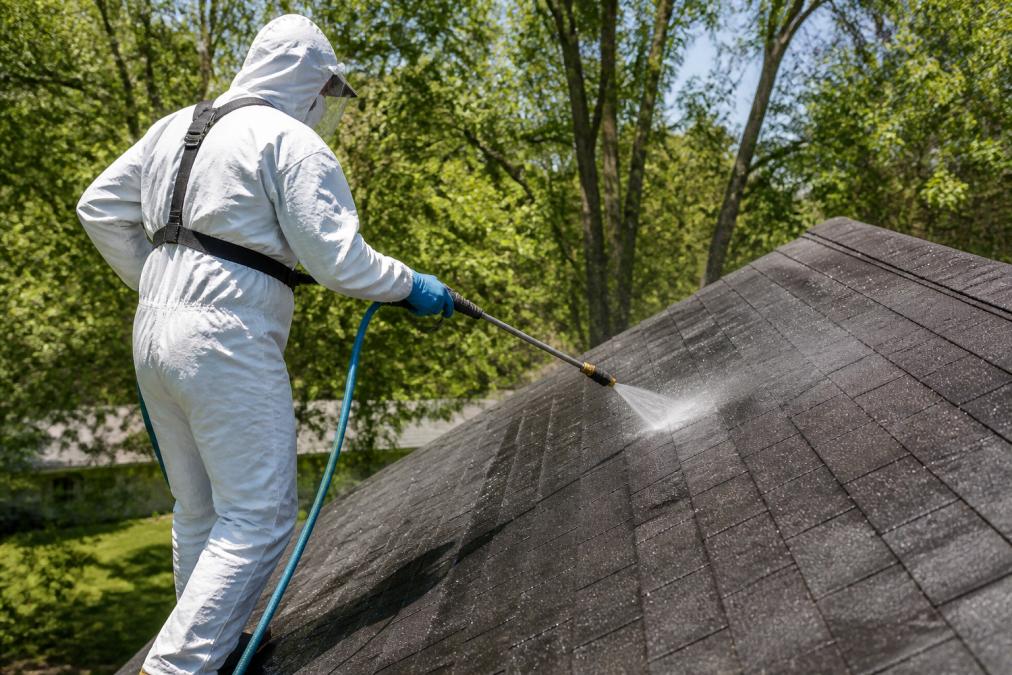
The process follows a straightforward sequence: pre-wet the surrounding landscaping, apply the cleaning solution to the roof substrate, allow adequate chemical dwell time, then rinse gently from a safe distance. That dwell time is where the chemistry does its job, killing algae, moss, lichen, and mildew at the root rather than just scrubbing the surface.
The Role of Sodium Hypochlorite and Surfactants
The two core ingredients in most professional soft wash roof cleaning solutions are sodium hypochlorite and surfactants. Sodium hypochlorite is the active biocide, it penetrates and kills the biological organisms causing staining, including the notoriously stubborn Gloeocapsa magma, the cyanobacterium responsible for those dark streaks that run down asphalt shingles across humid climates.
Surfactants serve a different but equally important function. They reduce the surface tension of the cleaning solution, helping it cling to vertical and pitched roof surfaces longer instead of running off immediately. This extended contact time makes the treatment far more effective and reduces the volume of chemical needed overall.
Professional-grade solutions also often include a fungicide component to address lichen and moss growth, which embed their root-like structures (rhizines) into shingles and are considerably harder to remove than surface algae alone.
Soft Washing vs Pressure Washing Roof: Key Differences
The soft washing vs pressure washing roof debate shouldn’t be a debate at all. For roof surfaces, pressure washing is the wrong tool, full stop. The confusion persists because pressure washing works well on concrete, pavers, and some siding materials, which leads homeowners to assume it’s equally appropriate everywhere. It isn’t.
| Factor | Soft Washing | Pressure Washing |
|---|---|---|
| Operating pressure | 60-500 PSI | 1,500-4,000 PSI |
| Primary cleaning agent | Chemical solution | Water force |
| Granule loss risk | Minimal | High |
| Effective on algae/moss | Yes (kills at root) | Partial (surface only) |
| Shingle integrity impact | None when done correctly | Significant damage risk |
| Results longevity | 2-5 years | Months (regrowth faster) |
| Manufacturer approved | Generally yes | Generally no |
Soft washing targets the biology. Pressure washing targets the surface. Because algae and moss grow from root systems embedded in the shingle, surface removal alone means regrowth within months. A proper soft wash treatment kills the organism entirely, which is why results last considerably longer.
Why High Pressure Damages Asphalt Shingles
Asphalt shingles are not built to withstand concentrated water pressure. The granules embedded in the shingle surface serve as the primary UV protection layer, once those granules are stripped away, the underlying asphalt is exposed and degrades rapidly. High-pressure water blasts granules loose, accelerates shingle wear, and can force water up under shingle edges, creating pathways for moisture intrusion.
A common mistake among DIYers is treating the roof like a driveway. The materials are fundamentally different. Concrete can handle high pressure. Asphalt shingles cannot. Even a "low" pressure setting on a standard consumer pressure washer is likely to cause granule loss on older shingles, and the damage compounds with each cleaning.
Using a pressure washer on asphalt shingles can void your roof manufacturer’s warranty. Many manufacturers explicitly state that high-pressure cleaning is not an approved maintenance method. Check your warranty documentation before any [cleaning method](/exterior-cleaning-services/) is applied.
Is Soft Washing Safe for Roofs? What the Evidence Shows
Is soft washing safe for roofs? Yes, provided the chemical concentrations are appropriate, application is done by a trained professional, and the rinse cycle is thorough. The method is endorsed by the Asphalt Roofing Manufacturers Association as the accepted approach for removing algae from asphalt shingles. According to the Asphalt Roofing Manufacturers Association guidance on algae cleaning, low-pressure washing with appropriate cleaning solutions is the recommended cleaning method for asphalt shingle roofs.
The evidence is consistent: soft washing removes biological growth without compromising shingle integrity when done correctly. The operative phrase is "when done correctly." Concentration, dwell time, rinse volume, and equipment calibration all matter.
Roof Warranty Implications You Should Know
This is the angle most guides skim past, and it’s arguably the most important one for homeowners. Many asphalt shingle manufacturers include specific maintenance language in their warranty documentation. Using a non-approved cleaning method, including high-pressure washing, can void warranty coverage for premature granule loss, shingle cracking, or moisture damage.
Soft washing, by contrast, aligns with manufacturer specifications from major roofing brands. Before scheduling any roof cleaning, pull your warranty documentation and confirm which methods are approved. If you can’t locate it, your roofing contractor or the manufacturer’s customer service line can confirm. The National Roofing Contractors Association homeowner resources provides guidance on verifying manufacturer specifications for roof maintenance.
A professional exterior cleaning company should be able to confirm their methods align with your shingle manufacturer’s requirements before starting work.
Chemical Concentration Safety and Shingle Integrity
The most common error in DIY soft washing isn’t the technique, it’s the concentration. Sodium hypochlorite that’s too strong can bleach shingle granules, accelerate deterioration of the asphalt binder, and cause chemical corrosion on metal flashing, gutters, and roof vents.
Professional soft wash operators calibrate their mix ratios based on the severity of biological growth, the age of the roof, and the roof substrate material. A heavily infested roof with thick lichen colonies requires a different approach than a roof with light algae streaking.
Ask any roof cleaning company what concentration of sodium hypochlorite they use and how they adjust it for different roof conditions. A professional should answer this without hesitation. If they can’t, that’s a red flag.
Best Roof Cleaning Solutions for Algae, Moss, and Lichen
Not all roof staining is the same, and the best roof cleaning solutions are matched to the specific biological threat present. Understanding what you’re dealing with determines how the solution should be formulated.
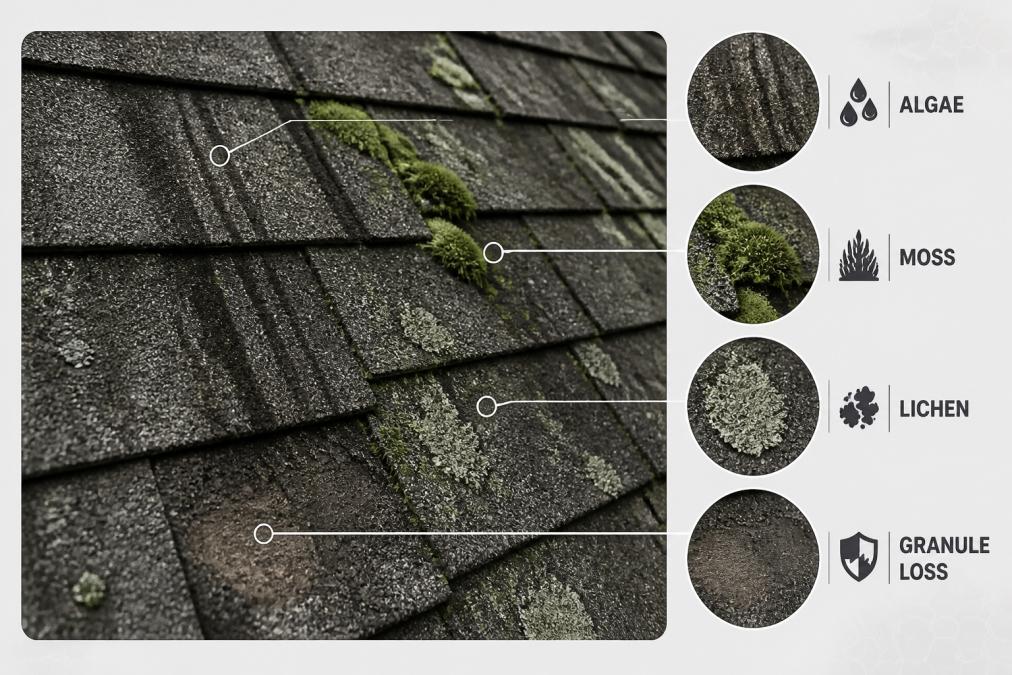
Gloeocapsa magma (algae) is the most common culprit behind dark streaking on roofs in humid climates. It responds well to sodium hypochlorite solutions at standard professional concentrations, typically clearing within days of treatment as the organism dies and washes away with rain.
Moss is more stubborn. It physically attaches to the roof substrate and holds moisture against the shingle surface, accelerating deterioration. Effective moss removal requires both a biocide to kill the growth and sufficient dwell time for the solution to penetrate the root structure. Dead moss will begin to detach naturally over several weeks following treatment.
Lichen is the most tenacious of the three. It bonds to the shingle surface at a chemical level, and aggressive mechanical removal causes more damage than the lichen itself. A professional soft wash treatment kills lichen effectively, but the physical remnants may take multiple rain cycles to fully release from the shingle. Patience is part of the process.
Protecting Landscaping and Plants from Chemical Runoff
Environmental impact of runoff is a real concern that deserves a direct answer. Sodium hypochlorite in high concentrations is harmful to plants, grass, and garden beds. Runoff management is not optional, it’s a core part of responsible soft wash practice.
Professional operators pre-wet all surrounding vegetation before application. This saturates plant tissue and dilutes any chemical contact. Tarps or plastic sheeting are used to cover sensitive plantings close to the structure. After treatment, a thorough rinse of all surrounding areas flushes residual chemicals away from root zones.
The EPA guidance on outdoor chemical use and runoff outlines best practices for minimizing environmental impact from exterior cleaning chemicals. Biodegradable surfactant formulations are now widely used by professional operators specifically to reduce environmental load in runoff.
If you have a rain garden, koi pond, or sensitive native plantings near your home’s foundation, communicate that clearly before any soft wash work begins. A reputable company will factor that into its runoff management plan.
How Often Should You Soft Wash a Roof?
How often you should soft wash a roof depends on your climate, roof pitch, surrounding tree coverage, and the type of shingles installed. A general guideline is every two to five years for most residential roofs in humid climates.
Roofs in shaded areas with heavy tree coverage tend to accumulate biological growth faster than sun-exposed roofs. Low-pitched roofs retain moisture longer and create more favorable conditions for algae and moss. North-facing roof sections typically show biological growth earlier than south-facing sections because they receive less direct sunlight.
Signs that your roof is due for cleaning include:
- Dark streaking running vertically down shingles (algae)
- Green or brown patches of moss, particularly near ridges and valleys
- Visible lichen colonies with a crusty, irregular texture
- Granule accumulation in gutters beyond normal seasonal shedding
- Visible discoloration that affects curb appeal
Waiting until growth is heavy makes treatment more involved and may require follow-up visits. Routine roof maintenance on a two-to-three-year cycle is more cost-effective than addressing a severe infestation.
Soft Wash Roof Cleaning Cost: What Affects Pricing
Soft wash roof cleaning cost varies based on several factors, and any quote you receive should reflect the specifics of your property rather than a flat rate.
The primary variables that affect pricing include:
- Roof size and pitch: Larger roofs and steeper pitches require more time, solution, and safety equipment
- Severity of biological growth: Heavy lichen or moss infestations require stronger solutions and longer dwell times
- Roof accessibility: Multi-story homes or complex rooflines increase setup time and safety requirements
- Number of treatment areas: Full roof vs. spot treatment affects solution volume and labor
- Geographic location and local market rates: Service pricing reflects local labor costs and competition
Go Bright Haus provides custom quotes based on a property assessment rather than generic pricing. Get a quote directly to understand what your specific roof cleaning project involves. Comparing quotes from fully insured providers is worth the time, the cheapest option rarely accounts for proper runoff management, appropriate chemical concentrations, or liability coverage if something goes wrong.
Post-Cleaning Roof Maintenance to Extend Results
Post-cleaning roof maintenance is where most homeowners leave value on the table. A soft wash treatment is not a permanent fix, it’s a reset. What you do after cleaning determines how long the results last.
The most effective preventive measure is zinc or copper strip installation near the roof ridge. As rainwater washes over these metal strips, it carries trace amounts of metal ions down the roof surface, creating an environment that inhibits algae and moss regrowth. Many roofing professionals consider this the single best investment for extending time between cleanings.
Additional maintenance practices that extend results:
- Trim overhanging tree branches to increase sunlight exposure and reduce debris accumulation on the roof surface
- Keep gutters clean to prevent moisture backup that encourages biological growth along eaves
- Inspect roof flashing annually for signs of chemical corrosion or separation that could allow moisture intrusion
- Schedule a visual inspection 12 months after cleaning to catch early regrowth before it becomes established
Soft washing removes biological growth effectively, but prevention is more cost-efficient than repeated treatment. Zinc strips and reduced shade coverage are the two highest-impact post-cleaning investments for most residential roofs.
One thing worth noting: some biological regrowth is normal within the first six months as dormant spores activate. This is not a sign that the treatment failed. A professional cleaning company should be transparent about expected timelines and what normal post-treatment appearance looks like. The Asphalt Roofing Manufacturers Association technical resources provides additional guidance on long-term roof care that complements professional cleaning.
Roof cleaning questions are among the most common concerns homeowners bring to Go Bright Haus. The combination of algae, moss, and lichen on an aging roof is not just an aesthetic problem, left untreated, biological growth accelerates shingle deterioration and shortens the lifespan of your entire roofing system. Go Bright Haus provides professional soft washing services using calibrated chemical concentrations, thorough runoff management, and fully insured workmanship. Get a quote and find out what a properly cleaned roof looks like.
Frequently Asked Questions
Does soft washing damage asphalt shingles?
Soft washing does not damage asphalt shingles when done correctly. Because it uses low-pressure water rather than high-pressure blasting, it avoids the granule loss and shingle cracking that pressure washing causes. The cleaning solution, typically a diluted sodium hypochlorite mix with surfactants, kills algae, mold, and lichen at the root without stripping the roof substrate. The critical factor is chemical concentration: solutions that are too strong can corrode flashing and degrade shingle integrity, which is why professional application matters.
How long does soft washing a roof last?
A professionally soft washed roof typically stays clean for two to five years, depending on climate, tree coverage, and roof pitch. Humid environments with heavy shade encourage faster regrowth of gloeocapsa magma and moss. Steeper roofs shed organic debris more easily and tend to stay cleaner longer. Post-cleaning treatments, such as zinc or copper strips along the ridge, can extend results by releasing trace metals that inhibit algae growth between cleaning cycles.
Can I soft wash my roof myself?
Technically yes, but it carries real risks. Mixing sodium hypochlorite at the wrong concentration can damage shingles, corrode gutters, or kill surrounding plants through chemical runoff. Working on a wet, sloped roof without proper fall protection is a leading cause of DIY injury. Many roofing manufacturer warranties also require professional application to remain valid. For a single-story roof with easy access, careful DIY is possible, but for anything steeper or more complex, a licensed exterior cleaning professional is the safer choice.
What is the average cost to soft wash a roof?
Soft wash roof cleaning cost varies based on roof size, pitch, degree of biological growth, and your location. There is no single industry-standard price. Factors like accessibility, the number of rinse cycles needed, and whether runoff containment is required all affect the final quote. The best way to get an accurate number is to request a site-specific estimate from a licensed, insured exterior cleaning company rather than relying on general averages that may not reflect your roof's actual condition.
This article was written using GrandRanker


