

Table of Contents
- Does Soft Washing Damage Roof Shingles?
- Understanding Soft Washing vs. Pressure Washing for Roofs
- How Soft Washing Asphalt Shingles Works Safely
- Soft Wash Roof Chemicals and Their Impact on Shingles
- Common Risks and How to Avoid Shingle Damage
- How Long Does Roof Soft Washing Last?
- When to Call a Professional Instead of DIY
- Frequently Asked Questions
Last Updated: October 7, 2026
Does Soft Washing Damage Roof Shingles?
When it comes to cleaning your roof, the question of does soft washing damage roof shingles is one homeowners ask frequently. The short answer is: soft washing, when done correctly, is actually one of the safest methods for cleaning asphalt shingles. But there’s important nuance here. Improper technique, wrong chemical choices, or using the wrong method altogether can absolutely harm your roof. At Go Bright Haus, we help Charlotte homeowners understand the difference between safe cleaning and damage-causing mistakes.
The real risk isn’t soft washing itself, it’s confusion about what soft washing actually is. Many people conflate soft washing with pressure washing, which operates at dangerously high water pressures. That confusion leads to costly decisions. Understanding the distinction matters for your roof’s longevity and your home’s curb appeal.
Understanding Soft Washing vs. Pressure Washing for Roofs
Soft washing and pressure washing are fundamentally different approaches, and that difference is critical for roof safety.
Pressure washing uses high-pressure water streams, typically 3,000 PSI or higher. This force can strip protective granules from asphalt shingles, create openings for water infiltration, and shorten your roof’s lifespan significantly. Many professionals avoid it on roofs entirely.
Soft washing relies on low-pressure water combined with biodegradable cleaning solutions. The pressure stays below 500 PSI, gentle enough to protect your shingles while still removing algae, moss, and mold effectively.
Here’s the practical difference:
- Pressure washing: High force, fast results, high risk of damage
- Soft washing: Low force, chemical assistance, protective to shingles
- Best for roofs: Soft washing every time
The chemicals do the real work in soft washing. They break down organic growth at the source. Water simply rinses away the loosened debris. This approach respects the integrity of your shingles while delivering clean results that last longer than pressure-washed surfaces.
For homeowners in the Charlotte area concerned about protecting their investment, soft washing is the method that makes sense. Professional teams use soft washing specifically because it works without compromising roof integrity.
Pressure washing a roof can reduce shingle lifespan by 10+ years. If someone quotes you pressure washing for roof cleaning, get a second opinion immediately.
How Soft Washing Asphalt Shingles Works Safely
The soft washing process for asphalt shingles follows a deliberate sequence designed to protect while cleaning.
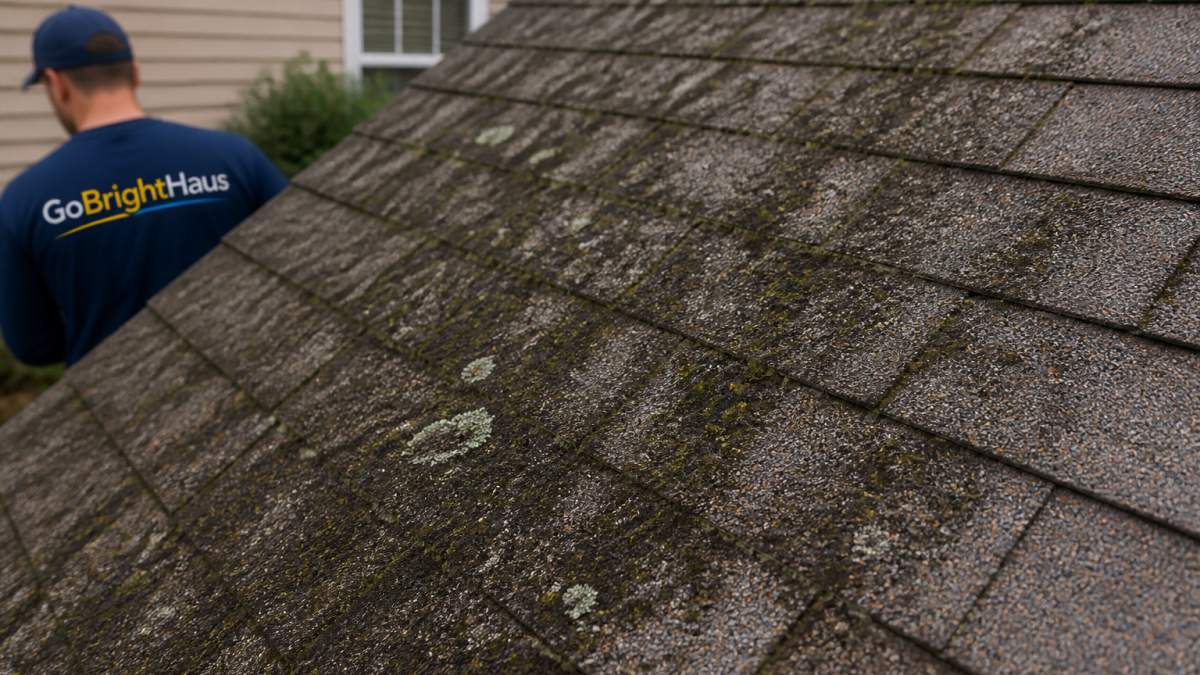
Step 1: Assessment and preparation. Before any water touches your roof, professionals inspect the shingles for existing damage, loose areas, or wear. This identifies which sections need extra care and which chemicals will work best. Proper assessment prevents problems before they start.
Step 2: Apply soft wash solution. Biodegradable cleaning agents are applied at low pressure to the affected areas. These solutions penetrate organic growth, algae, moss, lichen, breaking down the structures that allow them to grip the shingles. The solution does most of the work here.
Step 3: Dwell time. After application, the solution sits for a period, usually 15 to 30 minutes depending on the product and conditions. This allows the chemistry to work. You’re not fighting against time; you’re letting the solution work for you.
Step 4: Low-pressure rinse. A gentle rinse removes the loosened debris and remaining solution. The water pressure stays deliberately low. Think of it as a careful shower, not a blast.
Step 5: Inspection and follow-up. Professional teams inspect the results and address any areas needing additional attention. This quality-control step ensures thorough cleaning without shortcuts.
The entire process respects your shingles. No granule loss. No water forced under the shingle edges. No accelerated wear.
Soft washing asphalt shingles takes longer than pressure washing, but the results last 2-3 times longer because the shingles stay intact.
Soft Wash Roof Chemicals and Their Impact on Shingles
The chemicals used in soft washing are specifically chosen for effectiveness and safety. Understanding what’s on your roof matters.
Most professional soft wash solutions contain:
- Sodium hypochlorite (bleach) – Kills algae and mold at the cellular level
- Surfactants – Help the solution spread evenly and penetrate growth
- Water conditioning agents – Prevent mineral buildup and streaking
- Biodegradable additives – Break down naturally without harming landscaping
These chemicals are formulated to be tough on organic growth but gentle on asphalt shingles. The key is concentration. Professional-grade solutions use precise ratios, strong enough to work, weak enough to be safe.
A common concern: will chemicals damage shingles? The answer depends on proper application. Diluted solutions applied correctly won’t harm asphalt. The shingles are designed to withstand weather including rain with natural minerals. A properly mixed soft wash solution is gentler than many natural rainstorms.
What does cause damage is:
- Over-concentrated solutions left too long
- Solutions incompatible with asphalt shingles
- Application to shingles already compromised by age or weather
- Mixing incompatible chemicals
Professional teams in Charlotte know which products work safely on local roofing materials. They understand the chemistry and the consequences.
Never mix different cleaning products on your roof. Incompatible chemicals can create reactions that damage shingles or create toxic fumes. Stick with one professional-grade solution applied correctly.
Common Risks and How to Avoid Shingle Damage
Even with soft washing‘s safety advantages, certain mistakes can still cause problems.
Risk 1: Excessive pressure. Some operators push pressure higher than necessary, thinking more force equals better results. It doesn’t. Pressure above 500 PSI on asphalt shingles creates risk. Solution: verify your contractor’s pressure settings before work begins.
Risk 2: Chemical incompatibility. Older shingles or specialty shingles sometimes react poorly to certain chemicals. Wood shingles, in particular, require different solutions than asphalt. Solution: have a professional inspect your specific shingle type and choose compatible products.
Risk 3: Aggressive scrubbing. Some teams use brushes or pressure to physically remove growth. This defeats the purpose of soft washing. The chemicals should do the work. Solution: watch for teams that rely on brushing rather than chemistry.
Risk 4: Inadequate rinsing. Leftover chemical residue can degrade shingles over time. Incomplete rinsing is a common shortcut. Solution: ensure rinsing is thorough and uses low pressure throughout.
Risk 5: Timing and weather. Soft washing during extreme heat or immediately before rain can reduce effectiveness and create problems. Solution: schedule with a team that understands local Charlotte weather patterns and timing.
Risk 6: Structural damage from water infiltration. If water is forced under shingles during cleaning, it can cause rot and mold inside your attic. This is serious. Solution: soft washing at low pressure prevents this, but only if pressure stays genuinely low.
The safest approach is hiring professionals who understand these risks and have systems to prevent them. Go Bright Haus builds these protections into every roof cleaning project.
How Long Does Roof Soft Washing Last?
Results from soft washing typically last 2 to 3 years before algae and moss begin returning noticeably. This is significantly longer than pressure washing results, which often fade within 12 to 18 months.
Why the difference? Soft washing removes the growth and treats the surface in a way that slows regrowth. The shingles remain intact, maintaining their natural protective properties. Pressure washing removes surface growth but damages the shingles themselves, making them more susceptible to rapid regrowth.
Several factors affect longevity:
- Roof orientation and shade – North-facing roofs in shade regrow algae faster
- Local humidity – Charlotte’s climate supports organic growth year-round, so shaded roofs need more frequent cleaning
- Gutter maintenance – Clean gutters allow better water drainage and slow regrowth
- Shingle age – Older shingles accumulate growth more readily
- Chemical choice – Premium solutions often provide longer-lasting results
Most homeowners schedule soft washing every 2 to 3 years as part of regular maintenance. This keeps the roof looking clean and protects against the buildup that can trap moisture and cause damage.
A soft-washed roof stays clean longer because the shingles stay healthy. Healthy shingles resist regrowth better than damaged ones.
When to Call a Professional Instead of DIY
DIY roof cleaning carries risks that often outweigh the cost savings.
Safety first. Working at height is dangerous. Falls from roofs cause serious injuries and deaths every year (the CDC). Professional teams have proper equipment, training, and insurance. A single fall can cost far more than professional cleaning.
Equipment matters. Soft washing requires specific equipment, low-pressure systems, chemical applicators, safety harnesses, and proper mixing equipment. Renting or buying this gear for a one-time project rarely makes financial sense.
Chemical knowledge. Choosing the wrong product for your specific shingle type is easy without professional experience. The consequences show up months or years later as accelerated deterioration.
Guarantee and liability. If you damage your roof doing DIY work, you’re responsible for repairs. Professional teams carry insurance and often guarantee their work. That protection has real value.
Time and results. Professional soft washing takes time to do correctly. Rushing the process, which DIY projects often do, reduces effectiveness and increases risk.
For homeowners in the Charlotte area, professional soft washing is the smart choice. The cost is reasonable compared to roof replacement or repair. The results last longer. The risks are eliminated.
Go Bright Haus offers soft washing for residential and commercial properties throughout the greater Charlotte area. Our team handles the work safely and guarantees results. The Occupational Safety and Health Administration (OSHA) provides detailed guidelines on fall prevention and roof safety for professionals, standards our team follows rigorously.
Roof cleaning protects one of your home’s most important assets. Soft washing, when done by professionals who understand the chemistry and technique, is the safest and most effective approach for asphalt shingles. It cleans thoroughly without causing the damage that pressure washing creates.
If your roof shows signs of algae, moss, or mold staining, soft washing is the answer. Get a quote from Go Bright Haus and let our Charlotte team handle the work safely. We’ll protect your shingles while restoring your roof’s appearance and extending its lifespan. Contact us for an assessment of your roof’s cleaning needs.
Frequently Asked Questions
Does soft washing damage asphalt roof shingles?
No, soft washing does not damage asphalt roof shingles when performed correctly. The low-pressure application and biodegradable chemicals are specifically designed to clean without stripping granules or breaking down the shingle material. Damage occurs when high-pressure equipment is used or when improper techniques are applied, which is why hiring an experienced professional matters.
Can soft wash roof chemicals harm my shingles?
Quality soft wash roof chemicals are formulated to be safe for asphalt shingles. They target algae, moss, and mold without degrading the shingle’s protective granule layer. The key is using the correct chemical concentration and allowing proper dwell time before rinsing. Professional-grade solutions differ significantly from homemade or incorrectly mixed treatments.
How long does roof soft washing last before cleaning is needed again?
Results from roof soft washing typically last 2-5 years, depending on your climate, roof exposure, and surrounding vegetation. Areas with high humidity, shade, or trees nearby may require cleaning sooner. Professional soft washing provides longer-lasting results than pressure washing because it removes the root cause of growth rather than just surface staining.
Is pressure washing worse for roof shingles than soft washing?
Yes, pressure washing is significantly more damaging to roof shingles than soft washing. High-pressure equipment strips protective granules, shortens shingle lifespan, and can force water under shingles, causing leaks. Soft washing uses low pressure (under 500 PSI) combined with cleaning solutions, making it the safer choice for preserving your roof’s integrity.


